If you have ever stood in front of a chocolate case wondering about pralines vs chocolate truffles, the confusion is understandable. Both are small, elegant, gift-worthy chocolates. Both can be filled, rich, and beautifully finished. Yet they are not the same confection, and once you know what separates them, you start tasting them differently too.
The distinction matters most when quality matters. In artisan chocolate, names are not just marketing. They point to structure, technique, and the balance between chocolate shell, filling, texture, and finish. For buyers who care about craftsmanship, and for anyone choosing a box to gift well, knowing the difference helps you select with more intention.
Pralines vs chocolate truffles: the core difference
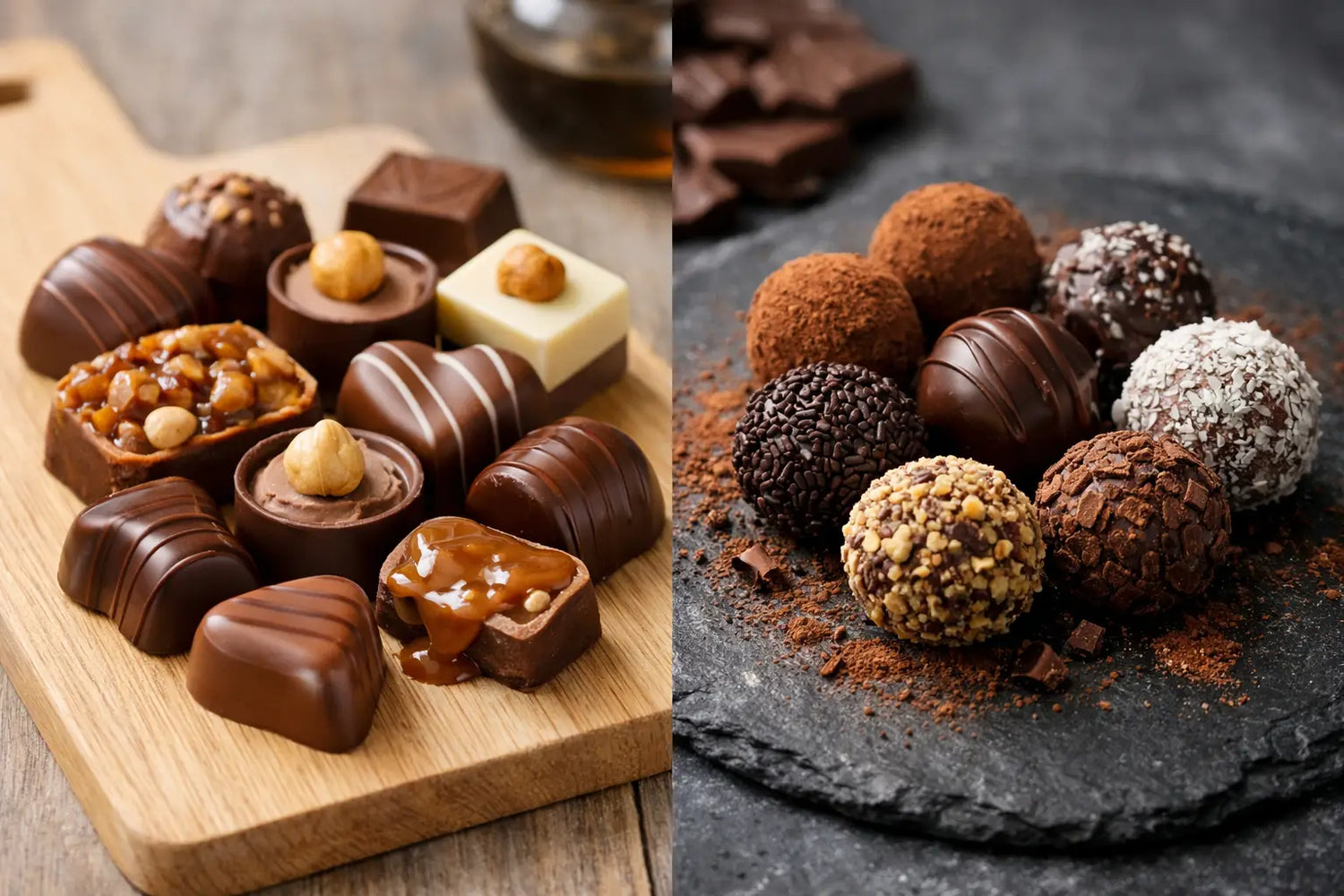
The simplest way to understand pralines vs chocolate truffles is this: a praline is usually a chocolate shell with a filling inside, while a chocolate truffle is typically centered around a soft ganache or similar creamy interior, often without a rigid shell as the defining feature.
In the Belgian tradition, pralines are molded chocolates. A chocolatier creates a shell, fills it with ganache, gianduja, caramel, praliné, or another center, then seals it and finishes it. The outer shell is part of the design. It gives shape, shine, snap, and contrast.
A chocolate truffle, by contrast, is usually named for its center first. It often begins with ganache made from chocolate and cream, sometimes enriched with butter, liqueur, spices, or fruit purée. That soft center may be rolled by hand and coated in cocoa powder, nuts, or a thin layer of chocolate. Some truffles are enrobed, but the sensation is still led by the creamy middle.
That is the cleanest distinction, though not every shop uses these terms with perfect discipline. In mass-market chocolate, names can blur. In artisan work, the difference is usually much more precise.
What is a praline?
A praline means different things in different food cultures, which is where some confusion begins. In Belgium, a praline refers to a filled chocolate with a molded shell. This is the meaning most relevant when discussing fine Belgian chocolate.
That shell is not incidental. It is tempered chocolate, carefully crystallized to deliver gloss, a clean break, and a controlled melt. Inside, the filling can vary widely. Hazelnut praliné offers a nutty, caramelized depth. Ganache brings softness and intensity. Salted caramel adds fluidity and contrast. Fruit fillings can brighten the profile, while coffee, vanilla, or spice can add a more aromatic finish.
A well-made praline is about architecture as much as flavor. You taste the shell first, then the filling opens, then the two merge. The experience is layered. That makes pralines especially versatile in gift assortments because each piece can offer a distinct shape, filling style, and tasting sequence.
What is a chocolate truffle?
A chocolate truffle is usually softer, more immediate, and more centered on ganache. The classic truffle was inspired by the appearance of the truffle fungus - irregular, round, and often dusted with cocoa.
The typical truffle center is made by combining chocolate with hot cream, then allowing the mixture to set until it can be piped, scooped, or rolled. From there, it may be coated in cocoa powder for a drier finish, chopped nuts for texture, or chocolate for a cleaner exterior. Some truffles are silky and barely firm enough to hold shape. Others are denser and richer, especially when dark chocolate is used generously.
Because truffles rely so heavily on the quality of the ganache, ingredient standards matter. The chocolate itself has nowhere to hide. If the cacao is expressive and well-made, the truffle tastes refined. If the base chocolate is flat or overly sweet, the whole confection feels less precise.
Texture is where the difference becomes obvious
If you are still deciding between pralines vs chocolate truffles, texture is often the fastest way to tell them apart.
A praline usually begins with a snap. Even a thin shell creates a small moment of resistance before the filling releases. That contrast is part of its appeal. You get structure and softness together.
A truffle is usually more yielding from the start. If dusted in cocoa, it may feel delicate and almost velvety before it reaches the palate. If lightly enrobed, the coating is often thinner and less structurally important than the shell of a molded praline. The center remains the main event.
Neither is inherently better. It depends on what kind of chocolate experience you want. If you enjoy contrast, neat geometry, and variety in fillings, pralines are often more satisfying. If you want a richer, creamier, more direct expression of ganache, truffles are hard to beat.
Flavor range and craftsmanship
Pralines tend to showcase a chocolatier’s range. Because they are molded and filled, they invite more variation in shape, decoration, and center. A single box can move from hazelnut praliné to passion fruit caramel to coffee ganache without losing coherence. For gifting, that range is valuable. It gives the box rhythm and discovery.
Truffles are often more focused. The variations usually come through the ganache itself and the coating rather than through sharply different internal structures. A dark chocolate truffle with Madagascar cacao, a Marc de Champagne truffle, and an espresso truffle can all feel distinct, but the format remains more uniform.
From a craft perspective, pralines demand precision in tempering, molding, filling, sealing, and shelf-life balance. Truffles demand precision in emulsion, texture, and handling. One is not easier than the other, but they test different skills.
This is where bean-to-bar production adds real value. When chocolate is made in-house from selected cacao beans, the maker controls roast profile, refining, and flavor development before the confection stage even begins. In a praline, that care shapes the shell and how it frames the filling. In a truffle, it shapes the ganache at its core. You taste origin and process more clearly when the chocolate itself has been treated as the main ingredient rather than a generic coating.
Which is better for gifting?
For many gift buyers, pralines are the more classic choice. They present beautifully, travel relatively well, and offer visual variety. Open a well-composed box of pralines and each piece signals intention. That makes them especially suited to formal gifting, thank-you presents, and holiday assortments.
Truffles are often the more intimate choice. They can feel slightly more indulgent, more dessert-like, and a bit less ceremonial. If the recipient loves rich chocolate and creamy textures, truffles can be a better match than a mixed praline assortment.
There is also a practical trade-off. Some truffles, especially those with very fresh ganache and minimal coating, are more delicate and may have a shorter ideal window for enjoying at peak texture. Pralines can be more structurally stable, though that always depends on the filling.
Why the terms get mixed up
Not every chocolate shop uses classic terminology consistently. Outside Belgium, praline might refer to a sugary nut confection, especially in the American South, where pralines are often made with pecans, sugar, butter, and cream. In France, praliné refers to a caramelized nut paste used as a filling ingredient. Then in general retail, many filled chocolates are casually called truffles because the word sounds luxurious.
So when someone says truffle, they may mean any small premium chocolate. When someone says praline, they may mean a nut-based sweet rather than a filled bonbon. Context matters.
If you are shopping for artisan chocolate, the most reliable approach is to look past the label and ask what the piece actually is. Is it molded with a shell and a sealed filling? That is a praline in the Belgian sense. Is it built around a soft ganache center, rolled or coated? That is a truffle.
How to choose between pralines and truffles
Choose pralines if you want variety, a cleaner shape, and the contrast of shell and center. They are ideal when presentation matters and when you want a box that offers several flavor experiences in one collection.
Choose truffles if you want softness, intensity, and a more ganache-forward style. They suit chocolate lovers who prioritize creaminess and a fuller melt over the snap of a shell.
If you are buying from a maker that works bean-to-bar, it is worth trying both. The same chocolate can behave very differently in a crisp praline shell than it does in a fresh truffle center. At The Belgian Chocolate Makers, that distinction is part of the pleasure: craftsmanship is not only about flavor, but about format, texture, and how each piece expresses the chocolate itself.
The best choice is not really about prestige. It is about mood, occasion, and what kind of bite you want to remember after the chocolate is gone.