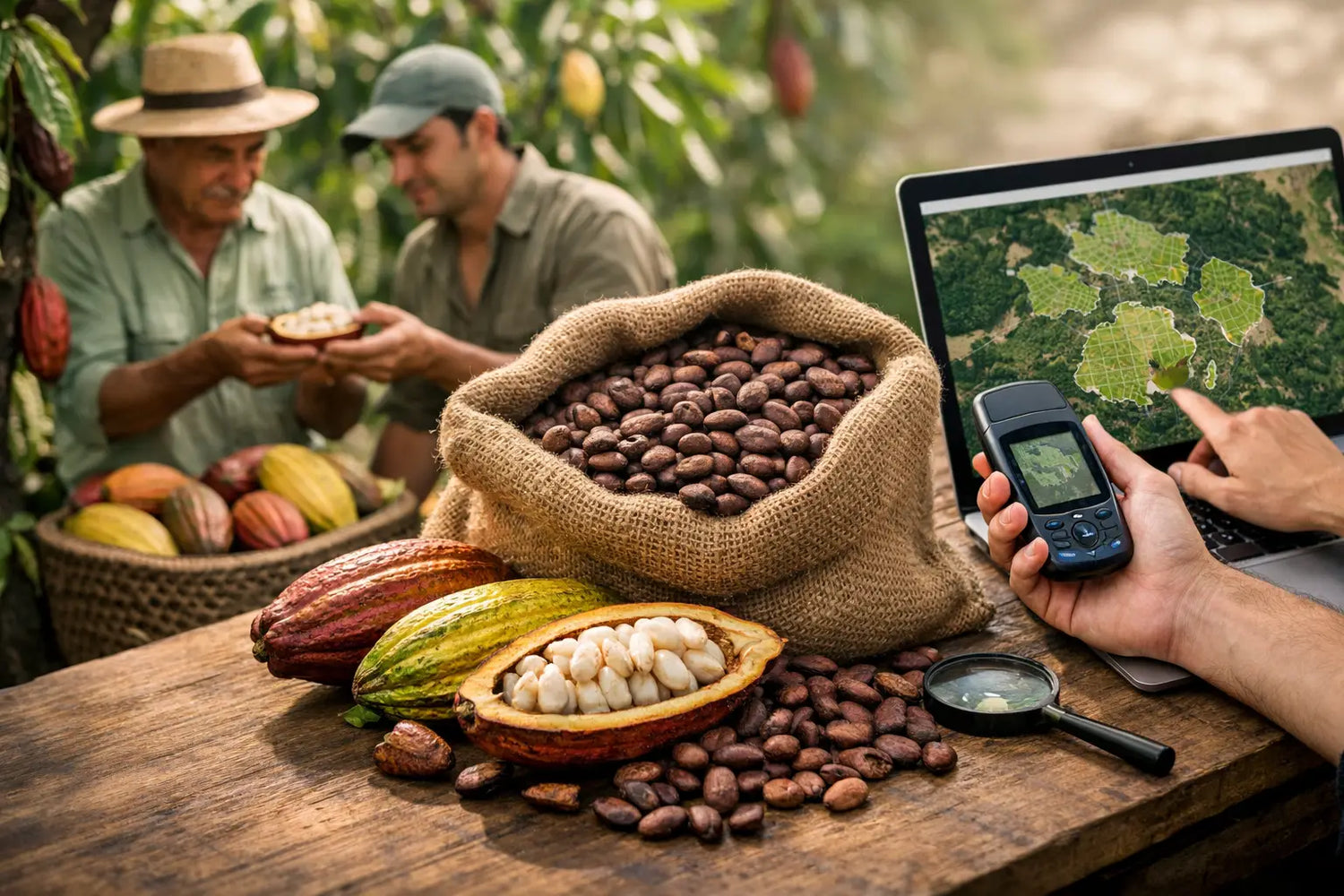
A chocolate label can say single origin, ethical, direct trade, or artisan, and still leave one basic question unanswered: where did these cacao beans actually come from, and how do we know? That is where traceable cacao sourcing explained in plain terms becomes useful, especially for buyers who care about quality as much as conscience.
In fine chocolate, traceability is not a marketing extra. It is a practical way of connecting flavor, farming, pricing, and production. If a chocolate maker can identify the beans' origin with precision, understand who produced them, and follow their movement through the supply chain, the final bar carries more than a pleasant taste. It carries credibility.
What traceable cacao sourcing really means
At its simplest, traceable cacao sourcing means a chocolate maker can account for where cacao was grown, who handled it, and how it reached the workshop. The level of detail can vary. Some brands trace to a country, others to a region, a cooperative, a fermentation center, or a specific farm.
That difference matters. Saying cacao comes from Peru is better than saying it comes from "South America," but it is still broad. Peru contains many growing regions, post-harvest practices, and flavor profiles. More precise traceability gives a clearer picture of both character and accountability.
For consumers, traceability answers questions that affect trust. Was the cacao blended from unknown sources? Were the beans purchased through a chain so long that farmer compensation became difficult to verify? Is the flavor in the bar connected to a known terroir and harvest practice, or is origin being used loosely?
For makers, traceability supports consistency and informed craftsmanship. Bean-to-bar chocolate is highly sensitive to the raw material. Roasting, winnowing, refining, and conching all depend on what arrived at the workshop in the first place. If a maker knows the beans well, they can make choices that respect origin rather than flatten it.
Why traceable cacao sourcing explained matters to chocolate quality
People often associate traceability only with ethics, but quality is just as central. Fine cacao is an agricultural product, not a neutral commodity. Variety, climate, soil, harvest timing, fermentation, and drying all shape flavor before the maker ever touches the beans.
When sourcing is traceable, flavor has context. A bright fruit note, a floral aroma, or a deep nutty finish is not treated like a lucky surprise. It can be connected to a place and process. That makes tasting more meaningful and production more disciplined.
This is one reason bean-to-bar makers place such emphasis on origin. Chocolate made in-house from whole cacao beans allows a direct relationship between source material and finished result. In a workshop-led model, the maker is not simply melting industrial couverture and adding branding on top. The transformation begins with the bean, so sourcing is part of the craft itself.
There is also a quality control advantage. If a particular lot performs exceptionally well, traceability makes it possible to understand why. If a shipment arrives with issues, the maker can identify where problems may have emerged. Without that visibility, quality becomes harder to protect.
What traceability does and does not guarantee
Traceable cacao sourcing is valuable, but it is not magic. A traceable supply chain is not automatically a fair one, and a well-designed label is not proof of excellent farmer income. Traceability shows visibility. Ethics depend on what a company does with that visibility.
For example, a maker may know the exact cooperative and still pay prices that do not reflect quality or production realities. On the other hand, a maker with strong long-term relationships may improve farmer outcomes even if every detail is not presented on the front of the package. The strongest sourcing programs usually combine both - documented traceability and meaningful commercial practice.
This is where nuance matters. Buyers should not assume every vague chocolate is unethical, nor that every highly detailed package is exemplary. The better question is whether the brand can speak clearly about origin, pricing approach, sourcing partners, and production standards without slipping into empty language.
How traceable sourcing works in practice
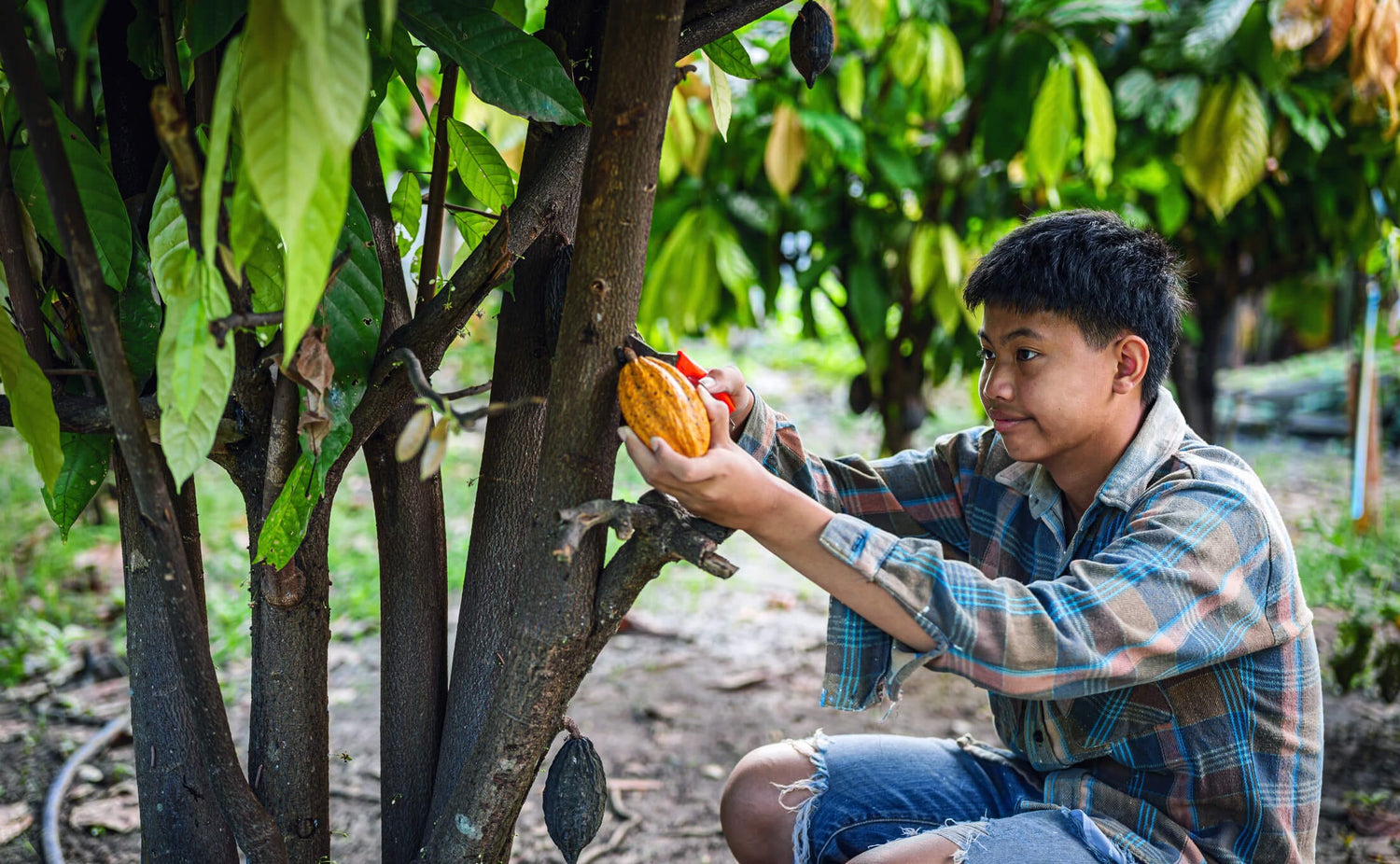
Most traceable cacao systems follow the same broad path, even if the business model differs. Beans are grown and harvested on farms, fermented and dried locally, then sold through a farm group, cooperative, exporter, importer, or direct sourcing network before reaching the chocolate maker.
At each stage, traceability depends on recordkeeping and physical separation. If beans from many places are mixed together early, origin claims become less precise. If lots are kept distinct and documented carefully, traceability remains stronger.
In practice, this can include harvest records, lot numbers, cooperative documentation, shipping data, and direct communication between sourcing partners and makers. Some companies use digital platforms to track lots. Others rely on smaller networks and close relationships. Technology can help, but the real issue is discipline. A digital system is only as truthful as the information entered into it.
For a craft chocolate house, the goal is not bureaucracy for its own sake. It is to preserve the identity of the cacao. When beans arrive with a known story and intact lot integrity, the maker can roast and refine with far more precision.
The role of farmer relationships and pricing
Any serious version of traceable cacao sourcing explained should go beyond maps and packaging. It has to include commercial relationships.
Cacao farmers do not benefit from traceability unless it leads to better recognition, stronger demand for quality, and more stable pricing. Fine-flavor cacao requires work: careful harvesting, fermentation management, drying control, and lot separation. Those steps take labor, infrastructure, and skill. If the market does not reward them, traceability becomes cosmetic.
This is why direct relationships, or at least transparent and well-managed sourcing partnerships, matter so much in premium chocolate. They create the conditions for better feedback and better incentives. A maker can communicate what flavor profile they value. Producers can improve post-harvest handling. Both sides gain a clearer understanding of quality.
Still, direct trade is not always simple. Small makers cannot always buy from every farm without intermediaries, and not all intermediaries are a problem. Skilled importers and sourcing partners can add real value through logistics, financing, quality control, and long-term producer support. The point is not to eliminate every middle step. The point is to make the chain visible and responsible.
How to read traceability claims on chocolate
For shoppers, the challenge is knowing what signals are meaningful. A well-made bar or gift box should not require detective work, but some claims deserve a closer look.
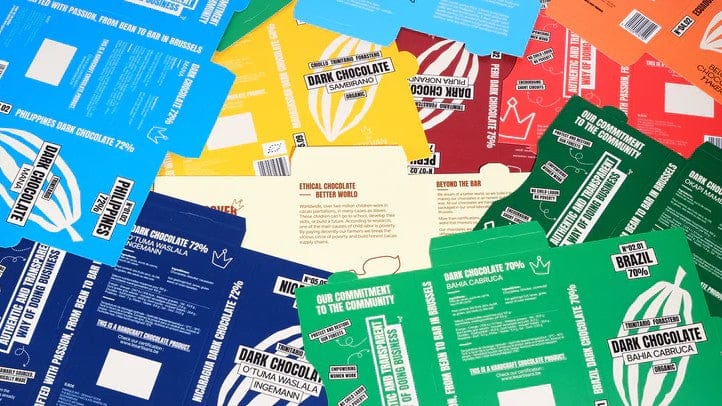
Country-only labeling is a starting point, not the full story. Region, cooperative, farm group, or harvest lot information is stronger. Mention of fermentation practices, producer partnerships, or transparent sourcing language also adds substance.
Bean-to-bar production is another important indicator because it suggests the maker is working directly with raw cacao rather than buying finished chocolate mass from elsewhere. That does not prove traceability on its own, but it usually reflects a deeper engagement with origin.
Consistency in language matters too. If a brand speaks in specific terms about cacao origins but stays vague about everything else, ask why. Trustworthy chocolate makers tend to be clear across the board - about ingredients, process, and sourcing choices.
Why this matters for gifting as much as tasting
Traceability is often discussed among enthusiasts, but it matters just as much for gifting. Premium chocolate is rarely bought only for sweetness. It is chosen because it says something - about taste, standards, and care.
When a gift includes chocolate made from traceable cacao, the product feels more complete. The recipient gets craftsmanship, yes, but also a genuine sense of origin. That gives the gift more character than generic luxury packaging ever can.
For buyers who want authenticity, traceability helps separate true craft chocolate from products that borrow artisanal language without doing the underlying work. In a market full of polished presentation, that distinction is worth knowing.
At its best, traceability brings chocolate closer to what it should be: a finished expression of a real ingredient, grown by real producers, transformed with skill rather than obscured by anonymity. The next time you choose a bar, a box of pralines, or a gift meant to impress, look for the story that can be told clearly and backed with detail. That is usually where the better chocolate begins.